A lot of people come onto this programme and realise, sometimes for the first time, that they are emotional eaters. That can feel like a lightbulb moment. It can also feel unsettling, because it shines a light on something you may have been doing for years.
Emotional eating is a coping strategy your brain has learned. Food can soothe, distract, reward, numb, or give you a brief lift when life feels heavy. It can also show up when life feels good. Celebrations, relief, excitement, the end of a long week. Food becomes a way of managing how you feel.
Slimpod works to untangle your long relationship with food and exercise over time. While that change is happening behind the scenes, I want to give you something you can use today!
It is called cost–benefit analysis.
The moment the pattern starts
Emotional eating rarely begins with a clear decision. You might notice a tight chest, a flat mood, a spike of stress, or that familiar tiredness that makes everything harder. Then your brain offers a solution that has worked before: eat something.
Your brain is doing what it has learned to do to protect you from discomfort. The goal is to create a pause, so you can respond consciously rather than react.
Cost–benefit analysis is one of the simplest ways to create that pause.
Cost–benefit analysis: the tool that gives you your choice back
Cost–benefit analysis (CBA) helps you weigh up what emotional eating gives you, and what it costs you, so you can make an informed decision in the moment. It works because it creates distance between you and the urge. When there is distance, you can think.
Here is how to do it.
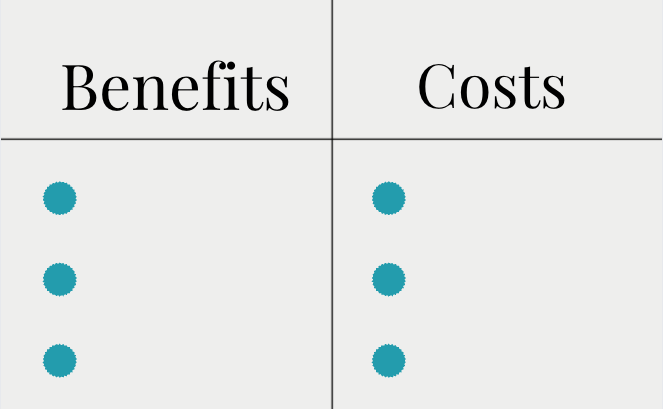
Take a piece of paper and draw two columns.
Benefits on the left. Costs on the right.
Then write down what is true for you in the moment.
The short-term benefits
For most people, the immediate benefits fall into two categories.
One is temporary relief. Eating can distract you from sadness, stress, worry, loneliness, or a sense of overwhelm. It can give you a few minutes where everything feels quieter.
The other is taste satisfaction. Comfort foods tend to be high in sugar and fat for a reason. Your brain gets a quick reward response, and that can lift your mood briefly.
If those apply to you, write them down in your own words. You might write things like:
- “This will take the edge off.”
- “I feel low and I want comfort.”
- “I want something that feels nice right now.”
- “I am exhausted and I want a boost.”
This will help you understanding what the behaviour is doing for you, so you can stop this.
The short-term costs
The most common immediate costs are guilt and shame, especially when emotional eating clashes with your health goals. The painful part is that shame often makes the original emotion stronger, which can keep the cycle running.
Your costs might sound like:
- “I will feel guilty afterwards.”
- “I will feel like I have failed again.”
- “I will feel uncomfortable in my body.”
- “I will want more to keep the comfort going.”
The long-term costs
When you look at the long-term picture, emotional eating does not offer real benefits. The comfort is brief, and the feeling underneath is still there.
Over time, the costs can include weight gain and increased health risks. Another cost is emotional dependence. When food becomes your main way of managing feelings, it stops you from developing other coping strategies that support you properly.
Write the long-term costs that matter to you.
The question
At the bottom of your page, add one question:
What do I actually need right now?
Because the need underneath emotional eating is usually valid. It might be comfort, rest, reassurance, relief, connection, or something to look forward to.
Food can offer a quick hit of comfort. It rarely offers the kind of care that helps you feel better for longer than a few minutes.
When you name the need, you give yourself a chance to meet it more directly.
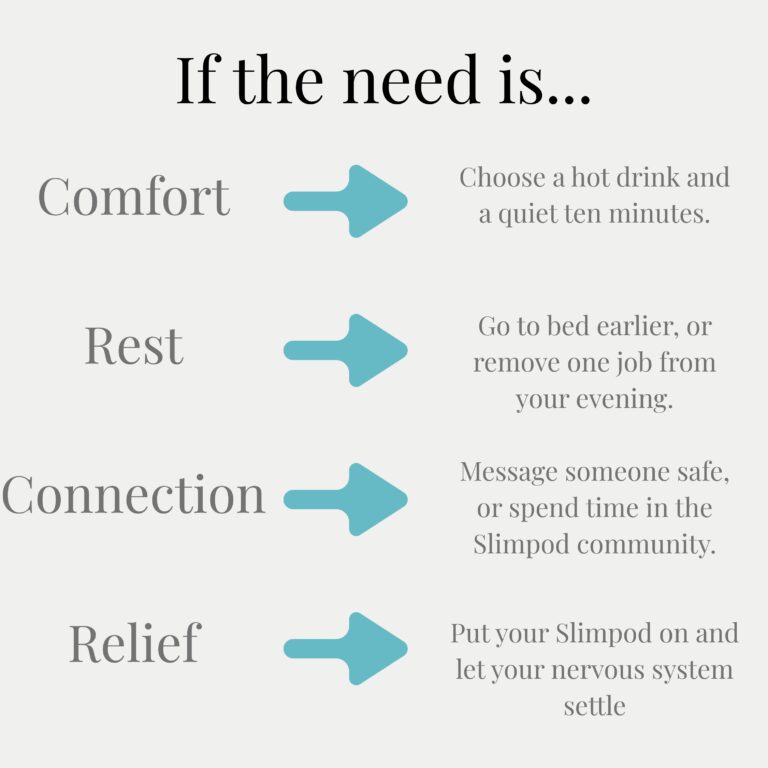
Keep it small. Keep it kind. Keep it doable.
Self-compassion is not optional
If you emotionally eat and then attack yourself, it makes the cycle stronger. Harsh self-talk increases stress -> Stress increases urges.
So, if you find yourself emotional eating, speak to yourself as you would speak to someone you love.
You can say:
- “I was trying to cope.”
- “This does not define me.”
- “I can learn from this without punishing myself.”
For some people, emotional roots of eating habits are linked to trauma or significant events, often from childhood. If you feel that might be true for you, one-to-one therapy with a professional can be a valuable support alongside Slimpod.
For other tips, check this out
And here is an amazing podcast with Dr Tara. Tara is a clinical psychologist, writer and individual and couple therapist. She worked in the NHS for 28 years, and has extensive experience working therapeutically, teaching, writing and speaking about mental health.